Mining expansion application raises fears of environmental loss, while company warns of job risks and possible closure
Editor/Reporter – George April
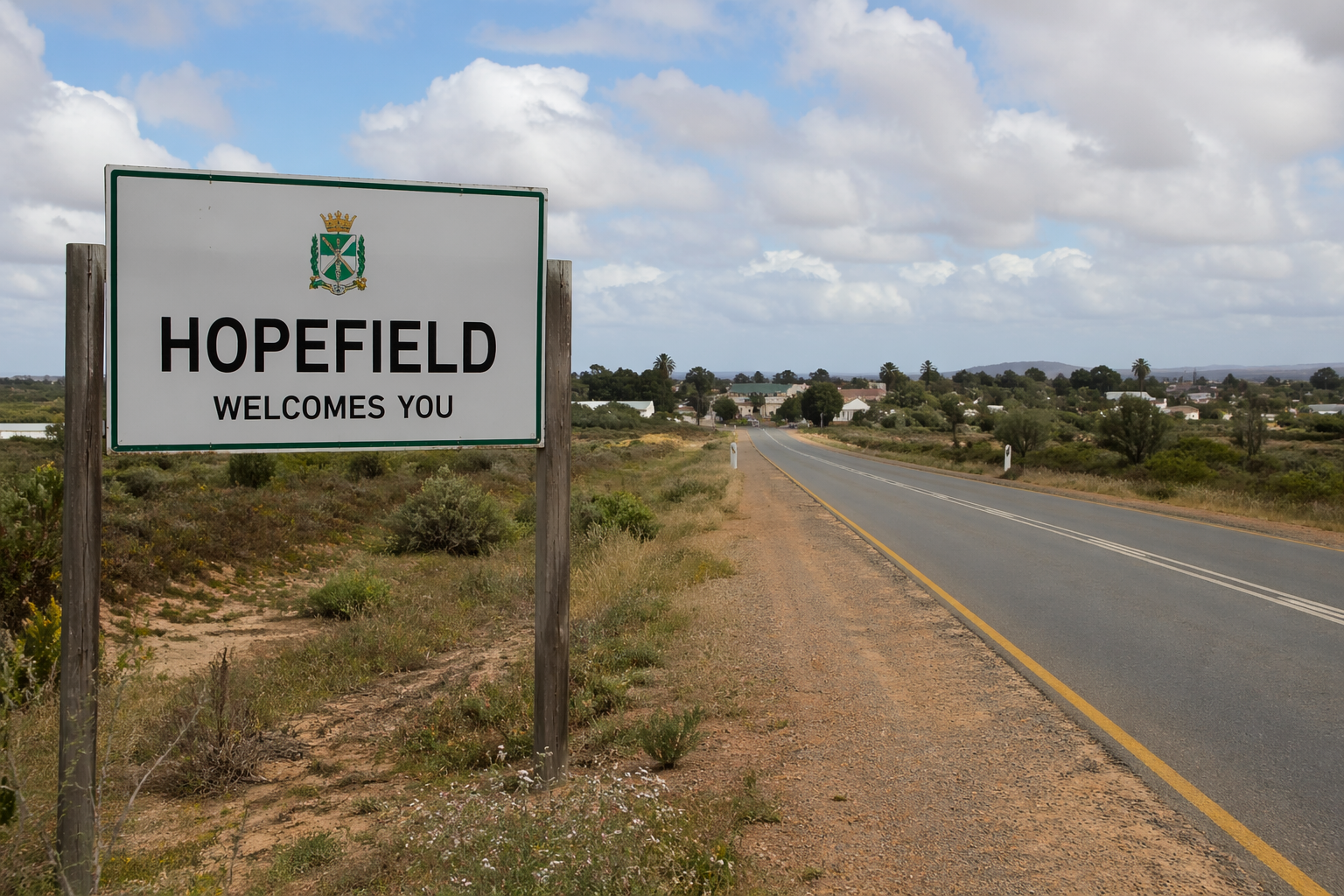
HOPEFIELD:- A new application by Kropz Elandsfontein Pty Ltd to exclude a portion of land from the West Coast National Park has triggered growing concern among Hopefield residents, who now fear the town could face even greater challenges in the near future. The application, submitted in terms of Section 21(2) of the National Environmental Management: Protected Areas Act, seeks the removal of a phosphate-rich portion of land currently forming part of the national park. The goal is to allow the mining company to expand its operations into this area.
A Critical Turning Point
According to the application, the targeted land contains approximately 40% of a larger phosphate resource that forms part of a single, continuous deposit currently being mined.
Kropz argues that without access to this portion, the mine cannot operate efficiently or profitably.
The company has revealed that:
- It has been operating at a significant financial loss
- Mining costs over six months exceeded R499 million, while income stood at about R315 million
- This leaves a shortfall of over R184 million
Kropz states that without expansion into the protected area, the premature closure of the mine may become inevitable.
Jobs vs Environment
The mine currently employs over 500 workers, many of them from Hopefield and surrounding communities.
The company warns that:
- Up to 5,000 people could be indirectly affected if the mine closes
- Investors are unlikely to inject further capital without a longer mine lifespan
- Expansion could extend the life of the mine by 20+ years
However, the proposal comes at a cost, the potential removal of protected land from a national park, something that is both legally complex and environmentally sensitive.
Land Swap Proposal
To offset the impact, Kropz has proposed a land swap.
This would involve:
- Offering alternative land of similar biodiversity value to SANParks
- Possibly returning the mined land after rehabilitation
- Exploring co-management or conservation agreements
The company argues that this approach could balance economic survival and environmental protection.
Legal Process Ahead
The application cannot proceed without:
- Approval from South African National Parks
- Final decision by the Minister of Forestry, Fisheries and the Environment
- A public participation process
This means residents, environmental groups, and stakeholders will all have a chance to voice their views.
Community Fears Growing
For Hopefield residents, this development adds to existing frustrations around limited municipal investment and service delivery.
Now, the town faces a difficult reality:
Many residents feel they are once again caught in the middle, between economic survival and environmental preservation.
- If mining expands: environmental concerns and potential long-term impact on tourism and natural heritage
- If mining fails: job losses, economic decline, and deeper poverty
Many residents feel they are once again caught in the middle, between economic survival and environmental preservation.
A town at a crossroad
Hopefield, known for its farming roots and natural beauty, now stands at a critical crossroads.
The outcome of this application could shape the town’s future for decades, determining whether it leans toward industrial expansion or environmental conservation.
For now, one thing is clear:
The decision will not only affect a piece of land, it will affect an entire community.

