
More Than Just Race – A Tale of Two South African Realities
Reporter – George April
Northern Cape:- South Africa is a land of contrasts, from its diverse cultures and landscapes to its divided opinions and communities.
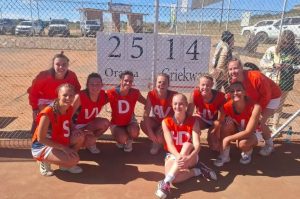 Picture – Orania facebook
But few comparisons are as intriguing, or as misunderstood, as that between Orania, the self-declared Afrikaner-only town in the Northern Cape, and Constantia. The latter is a residential neighborhood is one of Cape Town’s most prestigious, leafy suburbs. At first glance, the most obvious difference is race, but to stop there is to miss the bigger story.
A Different Vision of Autonomy
Orania is a privately-owned town, established in 1991 with a vision to preserve Afrikaner culture, language, and self-determination. Everyone who lives there agrees to uphold certain shared values, including doing all labour themselves. From farming to construction, to municipal services, with even outsourcing of work being discouraged. There’s even an internal currency (the Ora), used as a way to keep economic value circulating within the community.
Constantia, on the other hand, is a public suburb governed by the City of Cape Town. It is home to South Africans of various races, although it remains predominantly wealthy and white due to historical inequalities. Domestic workers and gardeners, mostly from poorer communities, travel in daily to service the homes and estates. Municipal services are provided by the city council, and Constantia residents pay standard municipal rates like any other suburb.
Governance and Self-Reliance
Orania functions with a degree of independence unusual in South Africa. Its infrastructure is built and maintained by residents; crime rates are extremely low, and unemployment is nearly zero, partly because all jobs are reserved for the community. Its residents elect their own local structures, which handle everything from water supply to schooling, completely outside of state infrastructure.
Constantia enjoys municipal services such as policing, refuse collection, and electricity through the City of Cape Town. Wealth allows for added layers of security, private patrols, electric fencing, and surveillance. However, like most suburbs in South Africa, it is still subject to the same national challenges: loadshedding, corruption, and service delivery issues.
Lifestyle and Culture
Life in Orania is cantered around communal values, Afrikaner heritage, and sustainability. There are no fast-food chains, no traffic congestion, and no big-brand supermarkets. It is a slower-paced, rural lifestyle where residents are expected to contribute to the upkeep and functioning of the town.
Constantia, in contrast, offers luxury, high-end retail, fine wine estates, and private schools. It is cosmopolitan, westernized, and far more materially affluent. Residents enjoy the privileges of wealth and global connectivity, but often rely on the underprivileged for labor and services.
The Controversy
Orania draws criticism, especially from political parties like the EFF, for what is seen as racial exclusivity. While technically legal under South Africa’s constitution (due to property rights and freedom of association), the town remains a thorn in the side of many who see it as a relic of apartheid thinking.
But Oranians argue that they are not excluding others based on race, but rather inviting those who share a common culture and values. They also point out that nobody is forced to live there or support it.
Meanwhile, Constantia faces little political backlash despite its visible inequality. Domestic workers still wait at gates for buses after long shifts. The contrast lies not in legality, but in perception and self-governance.
A Mirror of the Nation
In many ways, comparing Orania to Constantia forces South Africans to confront uncomfortable truths. Orania is criticized for exclusivity, while Constantia quietly maintains economic separation that is just as stark, but less obvious because it blends into the system.
The real question might not be whether Orania is right or wrong, but whether it reflects something deeply embedded in South Africa’s unresolved tensions, the search for identity, safety, and prosperity in a nation still healing from the past.
But have you visited Orania?
What do you think of their lifestyle and model?
Share your opinion or send us a story or experience at editor@ccnews.co.za or contact CCN through the “Contact Us” form on the news page.