– Amid Operation Dudula Backlash
CCN News
JOHANNESBURG:- The South African Human Rights Commission (SAHRC) has welcomed the Gauteng High Court’s judgment against Operation Dudula, describing the ruling as a victory for constitutional rights and the protection of human dignity.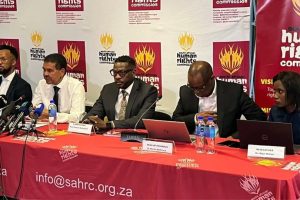
The High Court interdicted Operation Dudula, its leader Zandile Dabula, and office bearers from preventing or intimidating any person they identify as being a “foreigner” from accessing public services. The order specifically prohibits the movement from blocking access to healthcare facilities and schools, or from demanding that individuals produce passports or identity documents to prove their right to be in the country.
According to the SAHRC, the court’s decision reaffirms the principle that human rights in South Africa are universal, regardless of nationality or immigration status. The Commission said it has received numerous complaints from communities where Operation Dudula members allegedly confronted hospital staff and parents at schools, demanding the removal of undocumented foreign nationals.
Government departments have meanwhile condemned all acts of vigilantism, saying immigration and border management must be dealt with through lawful state processes. The Department of Health emphasized that medical facilities have a constitutional obligation to provide emergency care to all persons within South Africa’s borders, while the Department of Basic Education reminded schools that every child, regardless of nationality, has the right to basic education.
In a statement released after the ruling, Operation Dudula maintained that South African public services are overburdened by illegal immigrants, claiming that citizens are being denied healthcare and jobs. The organization said it intends to appeal the judgment, arguing that government has failed to manage migration effectively.
The SAHRC, however, says social frustrations must not be directed at individuals who are equally vulnerable. “The right to dignity and equality cannot be selectively applied,” the Commission said.
As communities across Gauteng and beyond react to the ruling, the judgment has reignited the national debate on migration, service delivery, and social justice – issues that continue to challenge the balance between compassion and control in South Africa’s democracy.
Public Reaction: Silence and Mixed Emotions
On social media, reaction to the court ruling has so far been muted. A post shared on the South Africans First Facebook group – a space known for lively debate on national issues – drew little public comment, suggesting that many citizens may be unsure or hesitant to engage on such a sensitive topic.
Community observers say the silence could reflect deep divisions and fatigue around the ongoing migration debate. While some South Africans express sympathy for local families struggling with access to public services, others argue that human rights cannot be denied on the basis of nationality.
As one civic group member put it privately, “We all feel the pressure in our communities, but we need solutions that uphold dignity for everyone.”