Concerns grow over lack of transparency, rushed public process, and former mayor’s sudden move to developer
CCN Editor/Reporter – George C April
Hopefield: – Tensions are rising in the small rural town of Hopefield, as residents question the legitimacy and transparency of a proposed large-scale solar and green hydrogen project linked to Phelan Green Energy.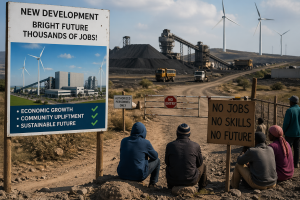 This week, advertising boards were erected in the area, creating the impression that the project is about to begin, despite the fact that no final approvals have been confirmed. Residents say this has only deepened mistrust in a process they already believe has excluded the community.
Public Participation Under Fire
The West Coast Environmental Protection Association (WCEPA) has formally challenged the process, arguing that it failed to meet basic legal and community participation requirements.
Key concerns include:
- Only one day’s notice was given for a crucial public meeting on 14 March 2025
- Just 11 residents attended, raising questions about accessibility
- No full technical documents were made available at the meeting
- Critical reports were uploaded late and in stages to the municipal website
- No information was shared via local radio
- No hard copies were made available for residents without internet access
According to WCEPA, this effectively denied meaningful public participation.
Confusion and Contradictions
Further frustration stems from widespread confusion between the environmental approval process and the municipal application process.
Many residents reportedly submitted comments to the wrong authority and were turned away, highlighting what critics call a poorly communicated and fragmented process.
WCEPA also points to serious inconsistencies in the application:
- Project size ranges from 900MW to as much as 2000MW
- Traffic estimates could increase from 30 trucks per day to up to 200
- Uncertainty remains whether electricity will feed into Eskom or power a hydrogen plant
There are also allegations of “project splitting,” where the development is divided into phases to minimize perceived environmental impact.
Environmental and Social Concerns
Potential impacts highlighted include:
- Loss of sensitive fynbos habitat
- Transformation of Hopefield’s rural character into an industrial landscape
- Increased noise, dust, and heavy traffic
- Safety risks linked to hydrogen storage and transport
While job creation is promised, reports warn of:
- An influx of job seekers
- Increased pressure on local infrastructure and services
Political Questions Raised
Adding to the controversy is the role of former Democratic Alliance mayor Andre Truter. Truter resigned as mayor of the Saldanha Bay Municipality on 31 January 2026 and reportedly joined Phelan Green Energy the very next day.
Residents are now asking:
- Was there prior involvement or knowledge?
- Why was the municipality seemingly unaware of ongoing negotiations?
- Can the process truly be considered fair and transparent?
Resident Voice
One concerned resident shared an emotional plea:
“We are not against development. We are against being ignored. How can decisions that will change our town forever be made without properly informing us? It feels like everything is happening behind closed doors, and we are the last to know.”
Community Still Waiting
At this stage, no final approval for the project has been confirmed, yet visible signs on the ground suggest momentum is building.
For many in Hopefield, the issue is no longer just about development, but about trust, accountability, and the right of a community to be heard.
COMMUNITY OVERVIEW – UNDERSTANDING THE JOB CREATION REALITY
Many residents see large projects as a gateway to jobs and economic relief, and understandably so. Promises of “thousands of jobs” bring hope to struggling communities. However, experience with similar developments shows a different reality.
Companies behind wind farms, mining operations, and energy projects often generate millions in revenue, yet surrounding communities see limited long-term benefit. Most employment happens during short construction phases, while permanent positions remain few and highly specialized.
Without clear, enforceable agreements, local communities are often left with minimal impact beyond temporary income. The real concern is not development itself, but the lack of transparency, accountability, and guaranteed local inclusion.
Residents are urged to stay informed, ask questions, and look beyond the headlines before placing their trust in job creation promises.