What the community needs to know.
CCN Online
Hopefield: The Phelan Green Group’s proposed R47-billion green hydrogen and electro-sustainable aviation fuel (eSAF) project near Hopefield continues to move forward. 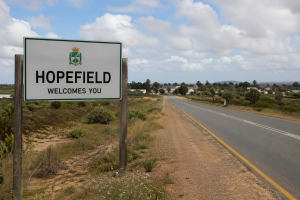 With a new environmental authorisation application expected in January 2027 after the current one lapses, serious technical and safety questions remain largely under-discussed in public forums.
The project plans a large industrial fuel plant roughly 1–3 km north of the town, fed by extensive solar capacity and producing green hydrogen via electrolysis before converting it into export-oriented eSAF for European markets. Phase 1 alone targets tens of thousands of tonnes of eSAF annually, with full build-out aiming for 140 000 tonnes per year.
Beyond the well-known local concerns around water use (millions of litres per day), Hopefield Sand Fynbos, visual impact and long-term socio-economic effects, the very process of making “green” hydrogen carries distinct chemical and electrical hazards that differ from traditional fossil-fuel plants.
Key electrolyser and process risks
Hidden dangers centre on internal gas crossover inside electrolyzers, corrosive electrolytes, and the challenges of running on fluctuating renewable power:
– Gas crossover: If the proton exchange membrane (PEM) or separator diaphragm degrades or tears, hydrogen and oxygen can mix inside the cell stack. This creates a pressurised explosive mixture that does not need outside air to ignite.
– Oxygen enrichment: Pure oxygen produced as a by-product, if it leaks into enclosed spaces or saturates clothing and materials, dramatically lowers ignition temperatures and can make normally fire-resistant materials burn violently.
– Corrosive electrolytes: Alkaline systems circulate concentrated potassium hydroxide (or similar) at elevated temperatures. Leaks pose severe risks of chemical burns and eye damage and can degrade gaskets and sensors over time.
– Catalyst and thermal runaway: Noble-metal catalysts used in PEM systems can trigger sudden localised exothermic reactions if trace hydrogen and oxygen recombine on the catalyst surface, potentially leading to thermal runaway and membrane damage.
– Fluctuating renewable loads: Plants powered by solar and wind experience frequent power ramps, shutdowns and partial-load operation. Running electrolysers at very low loads increases the rate of gas crossover and can push oxygen-in-hydrogen levels toward explosive limits.
– High-voltage DC hazards: Electrolyser stacks operate on high-current, high-voltage direct current. Unlike AC, DC arcs do not naturally extinguish, creating serious arc-flash risks and making electrical fires harder to isolate.
– Water treatment chemicals: Ultra-pure water is required. On-site treatment (especially if desalination is later introduced) involves hazardous chemicals that carry their own toxic spill and gas-release risks.
These are not theoretical laboratory issues. They are recognised operational hazards in the emerging green hydrogen sector worldwide. Proper design, continuous monitoring, gas detection, purging systems, explosion venting, and strict operating procedures can reduce the risks – but only if they are fully engineered, maintained and independently verified.
Where things stand locally
The current environmental authorisation process for the hydrogen/eSAF plant is set to lapse this week because outstanding specialist studies could not be completed in time. Phelan has confirmed it remains committed and plans a fresh application in January 2027.
Public participation will continue under the new process.
Residents and interested parties still can demand clear, detailed answers on major hazard assessment, emergency response planning, buffer distances from the town, and how the specific risks of electrolysis, hydrogen handling, oxygen management and battery energy storage will be controlled on a site so close to Hopefield.
Green hydrogen and eSAF are presented as part of South Africa’s energy transition and export opportunity. That conversation must include the full picture of the industrial risks that come with large-scale electrolysis and synthetic fuel production – not only the promised jobs and climate benefits.
CCN will continue to track the new application, specialist studies and community input as the process restarts.