
A Community Wake-Up Call
Reporter – George April
Cape Town:- Heavy rains have once again caused devastation across the Cape Flats, with Khayelitsha being one of the hardest-hit areas.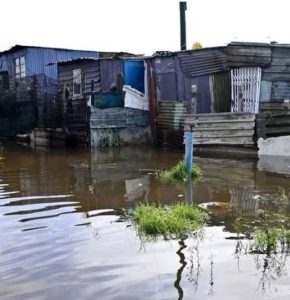
The Taiwan informal settlement has seen severe flooding, forcing many families to evacuate their homes and seek shelter at the Fulani Community Hall in Site C.
But Khayelitsha is not alone. Other Cape Flats communities, including parts of Mitchells Plain, Philippi, Delft, and Mfuleni, have also been affected. Roads have turned into rivers, homes have been damaged, and countless residents are left to pick up the pieces.
While frustration is understandable, it’s important to recognise that not all blame can be placed on the municipality. In many of these areas, illegal dumping, littering, and blocked stormwater drains have made the situation worse.
“We can’t always blame the municipality,” says a concerned resident from Site B. “Yes, they must fix and maintain infrastructure, but as residents, we also have a role to play. We need to stop throwing rubbish everywhere, it comes back to bite us when it rains like this.”
City of Cape Town Mayoral Committee Member for Water and Sanitation, Councillor Zahid Badroodien, has echoed similar concerns. “Our teams are working around the clock to assist affected communities, but we need residents to partner with us,” Badroodien said. “The illegal dumping of rubble, plastics, and waste into stormwater systems is a major contributor to flooding. It blocks the drainage network and prevents water from flowing away as it should.”
The City has deployed Disaster Risk Management teams, along with engineering and sanitation crews, to the hardest-hit areas. Relief efforts are ongoing, but real change starts with prevention – and that requires a united effort.
As communities clean up, the message is clear: for the Cape Flats to be better prepared for winter storms, residents must work together to keep public spaces clean and storm water drains clear.