
– Divided Over Green Hydrogen Project – Water & Existing jobs remain the major concerns.
CCN Editor – George April
HOPEFIELD:- Many residents, particularly within the white community, are strongly opposed to the development.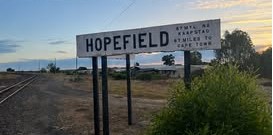 However, there is greater interest in the promised job opportunities within the coloured community.
The company speaks of approximately 500 permanent jobs following construction. Yet, residents point out that more than 500 people currently work on local farms and in related businesses—people whose livelihoods depend directly on the area’s scarce water resources. Phase 1 of the project requires 2 megalitres of water per day.
“We aren’t all the same,” says one resident. “Some are looking for work.
- Others fear that the water will run out and existing jobs will disappear.
- We just want straight answers.”
The project has already reached a final investment decision and has been included in the national Green Hydrogen Deal Book under the Minister of Electricity and Energy, Dr Kgosientsho Ramokgopa. Nevertheless, the necessary licences (environmental authorisation, water use licence, and atmospheric emission licence) have not yet been issued. Construction is scheduled for early 2027.
Despite this, neither the company nor the relevant government departments have held a public meeting in Hopefield itself to address these specific concerns.
Key stakeholders who have not yet spoken directly to the community include:
– Dr. Kgosientsho Ramokgopa (Minister of Electricity and Energy)
– David Maynier (Minister of Forestry, Fisheries and the Environment)
– Pemmy Majodina (Minister of Water and Sanitation)
– Officials from the Western Cape DEA&DP, West Coast District Municipality, and Saldanha Bay Municipality
The company states that it plans to open an office in Hopefield by early October and promises further engagement. However, residents say that promises are not enough. They want public meetings held in the town itself, independent water studies, and a clear explanation of how the 500 new jobs will affect the more than 500 existing livelihoods that depend on water.
Until those answers are provided openly and in plain language, the town remains divided – between those hoping for jobs and those fearing the loss of what they already have.
CCN has sent media inquiries to the ministers, the company, and the municipalities. Their responses will be published once received.