WCSS raises questions about alleged unequal funding, individual decision-making and unanswered requests for youth development support. Investors AIIM and Old Mutual Alternative Investments are also being asked to explain their oversight of the process.
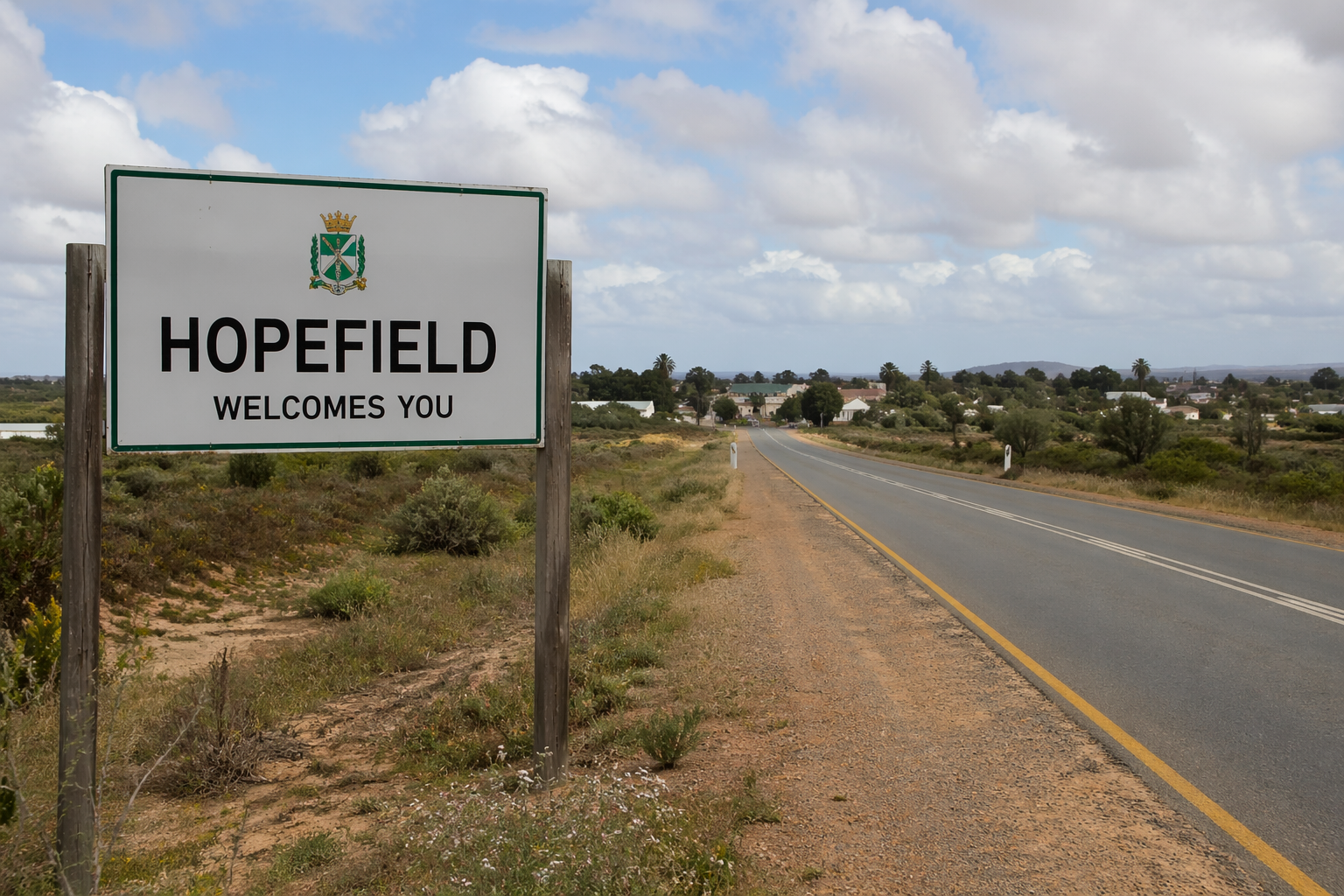
HOPEFIELD:- Questions about transparency, accountability and the allocation of community funding have emerged following months of unsuccessful attempts by West Coast Sports Solutions (WCSS) to secure support for youth development initiatives through the Hopefield Wind Farm Local Community Company (HWFLCC). The organization says its efforts, which began in April 2026, have been met with repeated delays, unanswered correspondence and no clear explanation of the criteria used to allocate support to local organizations.
What began as an attempt to secure assistance for youth sport has now developed into broader questions about how community funding decisions are made, who has the authority to approve them, and whether all organizations are treated fairly.
WCSS is a community-based organization working to create sporting and development opportunities for young people, including those who are no longer attending school.
Two meetings, but little clarity
On 2 October 2026, WCSS management met with directors of the HWFLCC to discuss the organization’s difficulties in obtaining support for its youth activities. According to WCSS founder George C. April, the meeting did not produce a clear commitment or satisfactory explanation regarding the organization’s requests. April says the discussions also raised concerns about how other local organizations had reportedly received financial assistance, while WCSS continued to struggle to obtain support for its youth programmed.
A separate follow-up meeting took place on 8 October between two WCSS management representatives and HWFLCC administrator Fowzia Davids. During this meeting, a proposed cooperation agreement and a proposal relating to skills development and work-related training were discussed and handed to David’s.
WCSS explained that Pieter Holloway of McGregor was assisting as a motivator in its skills development initiative. Davids sent Holloway a WhatsApp message during the meeting, inviting him to an online discussion, and showed the message to our two WCSS representatives.
However, no meeting materialized. April subsequently contacted Holloway to establish whether the invitation had reached him. Holloway reportedly confirmed that he had received it but had not received a response to his subsequent enquiries.
WCSS says further attempts to communicate with David’s also failed to produce meaningful feedback. April alleges that communication between himself and Davids through WhatsApp subsequently came to an end.
The organization says correspondence that followed largely consisted of administrative responses rather than clear answers to its questions or an indication of whether its proposals had been considered.
R50 000 indoor cricket contribution raises questions
One of the issues now being raised by WCSS concerns an alleged R50 000 contribution made to a local indoor cricket club for adults to establish the club. April says HWFLCC director Rowan Lamont, who is from Saldanha Bay, acknowledged the R50 000 contribution during a conversation with him.
According to April, Lamont also indicated that the wife of the person associated with the cricket club worked for Amoya, and that the funding decision had been taken by an individual director.
These statements raise questions about the process followed when community funding is approved, particularly whether decisions are made collectively by the board or whether individual directors can approve contributions independently.
April says that during the 2 October meeting with HWFLCC directors, those present advised him not to direct questions to Lamont. He wants to know why he was discouraged from approaching a director who had previously discussed the funding decision with him. According to April, Lamont had also indicated that not all decisions were necessarily taken by the full board of directors, but that some decisions were made by individuals.
If funding decisions can be made independently by individual directors, the community deserves clarity about the authority under which those decisions are taken, how they are recorded and what oversight measures are in place.
WCSS is not suggesting that a personal or employment connection automatically establishes wrongdoing. However, any potential conflict of interest in the allocation of community funding should be declared and managed transparently.
Questions about reported R300 000 rugby support
WCSS has also raised questions about reported financial support of approximately R300 000 towards Saldanha Bay Rugby Club’s Easter tournament. The organization wants confirmation of the amount, the purpose of the contribution and the criteria applied when the support was approved. It also wants to understand whether the fact that one of the HWFLCC directors comes from Saldanha Bay had any bearing on the decision.
These questions are not presented as proof of improper conduct. They concern the need for transparent and consistent funding criteria, particularly where community organizations working with young people are struggling to obtain assistance.
WCSS says it has been active for more than four years and believes its youth development work should be assessed fairly alongside applications from established sporting organizations.
Investors approached, but no substantive response
WCSS says it has also approached the investment parties associated with the project in an attempt to obtain clarity about community support and the oversight of funding decisions. The investors approached include African Infrastructure Investment Managers (AIIM) and Old Mutual Alternative Investments.
According to April, these approaches have not resulted in substantive answers to the concerns raised. The lack of response from the investors is now an important part of the matter.
While the day-to-day administration of the local community company may rest with its own representatives, questions remain about what oversight the investment parties exercise, how concerns about funding decisions are handled and whether there are mechanisms for community members to raise complaints independently.
The central question is whether the investors are aware of the concerns being raised by WCSS and what steps, if any, they take to ensure that community funding is allocated fairly and transparently.
Stellenbosch opportunity slipping away
The immediate consequence of the lack of clarity is the uncertain future of the WCSS Under-19 rugby team’s planned participation in a tournament in Stellenbosch on 5 December 2026. The registration deadline is Friday, 20 November. WCSS says it still needs assistance with the R700 team registration fee and transport costs. The organization previously obtained a quotation of R8 000 for return transport from Hopefield to Stellenbosch.
Despite its attempts to secure assistance, WCSS says it has not received a firm commitment that would allow the team to participate. The uncertainty has also affected the young players themselves. April says two boys asked him this week whether the Stellenbosch trip was still going ahead, but he was unable to give them a definite answer.
For WCSS, the proposed trip is about more than a rugby tournament. It is an opportunity for young men aged 17 to 19, including those no longer attending school, to participate in organized sport and potentially access further development opportunities.
April says the organization is now facing the possibility of cancelling another youth initiative after months of trying to secure support.
The questions that remain unanswered
WCSS says it is not asking for preferential treatment. It wants clear answers to questions that affect not only its own organization, but the wider Hopefield community.
Among the questions requiring answers are:
- What formal criteria does HWFLCC use when allocating community funding?
- Are registered NPOs and NPCs considered on the same basis as established sporting clubs?
- Can the reported R50 000 for indoor cricket contribution and approximately R300 000 rugby tournament contribution be confirmed?
- Who authorized these contributions, and were they approved by the full board or individual directors?
- Were any personal or organizational connections declared and considered when the decisions were made?
- Why was April reportedly advised not to direct questions to director Rowan Lamont?
- What became of the proposed cooperation agreement and skills development initiative discussed with Davids on 8 October?
- What oversight role do AIIM and Old Mutual Alternative Investments have in ensuring that community funding decisions are transparent and fair?
- What process is available to community organizations that believe their applications have not been treated fairly?
A community deserves answers
April, who is both the founder of WCSS and the founder of Cape Coast News, says his dual role is disclosed because the organization’s experience forms part of the subject of this report.
He maintains that the issue is not simply that WCSS has not received funding. It is the absence of clear communication and the lack of transparency surrounding decisions that affect opportunities for local young people.
The organisation says it has repeatedly attempted to engage constructively, including through meetings, formal proposals, emails and direct communication. For the young players waiting to hear whether they will travel to Stellenbosch, the lack of a decision has a very real consequence.
The broader question remains: if community development is a stated objective of a project, how can local organizations access that support, and who is accountable when their questions go unanswered?
Cape Coast News will publish any responses received from HWFLCC, Fowzia Davids, Rowan Lamont, AIIM, Old Mutual Alternative Investments and the other parties concerned.
All parties are being afforded an opportunity to respond to the issues raised.