Saldanha Approved, Hopefield Still Waiting
By CCN Newsroom
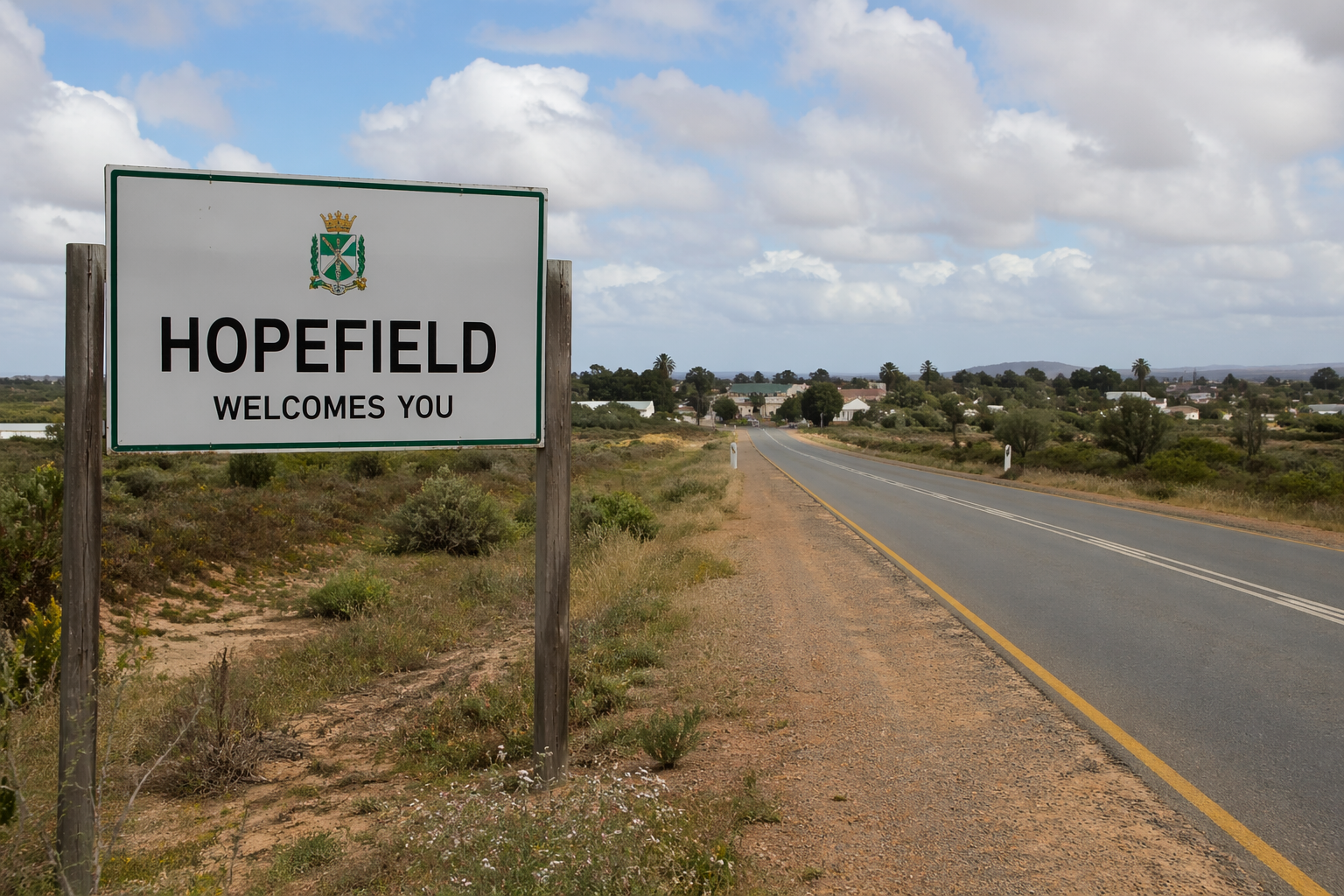
Hopefield: – While the South African government continues to invest billions into so-called “green energy”, not all West Coast towns are seeing the same results.
Saldanha Bay has officially received approval for a massive R47 billion green hydrogen plant, while Hopefield, just 60 km away, remains stuck in uncertainty over a proposed solar farm that has not yet been approved.
The contrast between these two towns reflects a bigger national problem – who gets included in green development, and who gets left behind?
Saldanha Bay Gets the Green Light for Hydrogen Megaproject
Earlier this year, government granted full approval to a large green hydrogen and ammonia project based in the Saldanha Bay Special Economic Zone (SEZ).
The project, led by a private company, will:
- Produce up to 85,000 tons of green hydrogen per year,
- Create hundreds of jobs in construction and port logistics,
- And use wind and solar energy (about 5 gigawatts) to power the production process.
The plant is part of South Africa’s bigger plan to become a major global exporter of green hydrogen, supplying countries like Germany, Japan, and South Korea with clean fuel.
Officials say the project will also feed extra electricity into the local grid, which could benefit neighbouring towns.
But where Exactly in Saldanha Bay?
The plant will be built in the Freeport Saldanha SEZ, a dedicated industrial zone near the harbour, chosen for its deep-water port access, strong wind, open land, and sunny climate.
Construction is expected to begin in early 2026, depending on the final agreements and infrastructure.
Hopefield – A Town Divided Over Solar Energy
Hopefield, a small farming town surrounded by nature, is facing its own energy question. A private company has proposed a large-scale solar farm near the town, but the project is not yet approved.
- It’s currently going through environmental impact studies and public participation hearings.
- But the community is clearly split.
“We were never properly informed.
One day we heard rumours, and the next day people were walking on the land with measuring tools,” said Mari van Wyk, a longtime resident. “We’re worried about the impact on our environment, our birds, our water, our plants.”
Others, however, believe the solar farm is Hopefield’s best chance at new jobs.
“I’ve been out of work for years,” said Willem Sedeman, a former contractor. “If this project can give us work, I’ll be the first to sign up. We can’t survive on hope alone.”
The Bigger Picture – Who Gets a Say in the Future?
What’s happening between Saldanha and Hopefield reflects a much bigger issue across the country. Who really gets to be part of South Africa’s green energy future?
Although developers are required to hold community meetings and do public participation, many people say these are just formalities.
“They say they ‘consulted’ us, but how many farm workers or elderly people even knew about the meetings?” asked Ronald Scheepers, a local youth activist.
What Does This Mean for the West Coast?
| Town | Type of Project | Status |
Community Response |
| Saldanha Bay | Green hydrogen + ammonia | Approved | Mostly positive, with some concern about inclusion |
| Hopefield | Solar farm | Still under review | Divided: environmental concern vs job creation |
Local Voices Want Real Inclusion
“We’re not against development,” said a church leader in Langebaan. “But include us from the start. Don’t only come when it’s time to build.”
Conclusion
The future of South Africa’s energy is changing fast, and the West Coast is at the centre of it. But if this change is to be truly green and truly fair, it cannot only be about technology and billions of rands. It must also be about listening to communities, involving them from the start, and making sure they share in the benefits.
CCN will continue to follow these developments closely, and keep the public informed first.