Election 2026 – CCN Political Discussion Feature – Community Voices Wanted
CCN News
Cape Town:- A Facebook post by Grant Pascoe, former Cape Town Councillor, has gone viral – igniting intense debate over the state of Cape Town politics ahead of the 2026 municipal elections.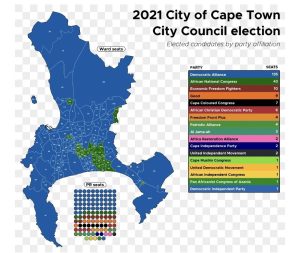
The post raises questions about power, accountability, voter turnout, and whether the city needs stronger political opposition or stability under its current leadership. Pascoe argues that after 20 years of DA control, Cape Town is governed with “little real pressure, little accountability, and little fear of consequences.” He points to rising tariffs, increasing cost of living, service delivery backlogs, and voter apathy as reasons the DA remains firmly in power.
According to the figures he shared, the DA holds 134 of 231 council seats, with the ANC at 43, EFF 10, GOOD 9, CCC 7, ACDP 6, PA 5, VF+ 4, and the remainder split among smaller parties. Pascoe believes opposition parties have failed to meaningfully challenge the DA in council, leaving residents with one dominant voice. He further suggests that non-voters play a major role in maintaining the status quo, stating that staying home on election day “does not punish bad governance – it rewards it.”
Pascoe calls for a “new disciplined political force” focused on affordability, accountability, service delivery and strong oversight, one not linked to old political behaviours.
The Push-back: “Cape Town Works – Don’t Break What Works”
As expected, the comments section exploded. Many residents strongly disagreed with Pascoe’s assessment, saying Cape Town remains one of the best-performing metros in South Africa.
One response praised the city for having lower unemployment, more housing handovers, better service reliability, clean water access, and status as a globally recognised city. Another warned that multi-party coalitions could lead Cape Town down the same path as Nelson Mandela Bay, Johannesburg and Tshwane, where instability and frequent power shifts have disrupted governance.
Others questioned Pascoe’s credibility, pointing to his history in multiple parties and urging more factual, non-partisan political writing.
Damian De Barros, a member of the GOOD Party and former candidate on the Western Cape regional election list, responded sharply, saying: “Your opinion pieces would carry so much weight if it was unbiased, supported with facts and not underhandedly pushing a divisive narrative. I hope to read more substantiated and unbiased work from you in the future.”
But what do the people of Cape Town really want in 2026?
The viral post has opened a door to a conversation many have avoided:
Is Cape Town better off with stability under a dominant party, or is a stronger opposition necessary for accountability and fairness?
Do residents value service delivery consistency, or is it time for new competition and political balance?
Should CapeTonians defend what works, or vote for change?
Have Your Say – Your voice matters!
Tell us what you think about the debate:
- Should the DA remain in power for stability?
- Does Cape Town need a strong new opposition force?
- Is voter turnout the real key to change?
- Are coalition metros a warning or an opportunity?
Submit your opinion using the “Contact Us” form on the CCN website.
We may feature selected responses in a follow-up story.