Heightened Safety, Proximity, and Water Concerns Amplify Community Divisions
CCN Editor – George April
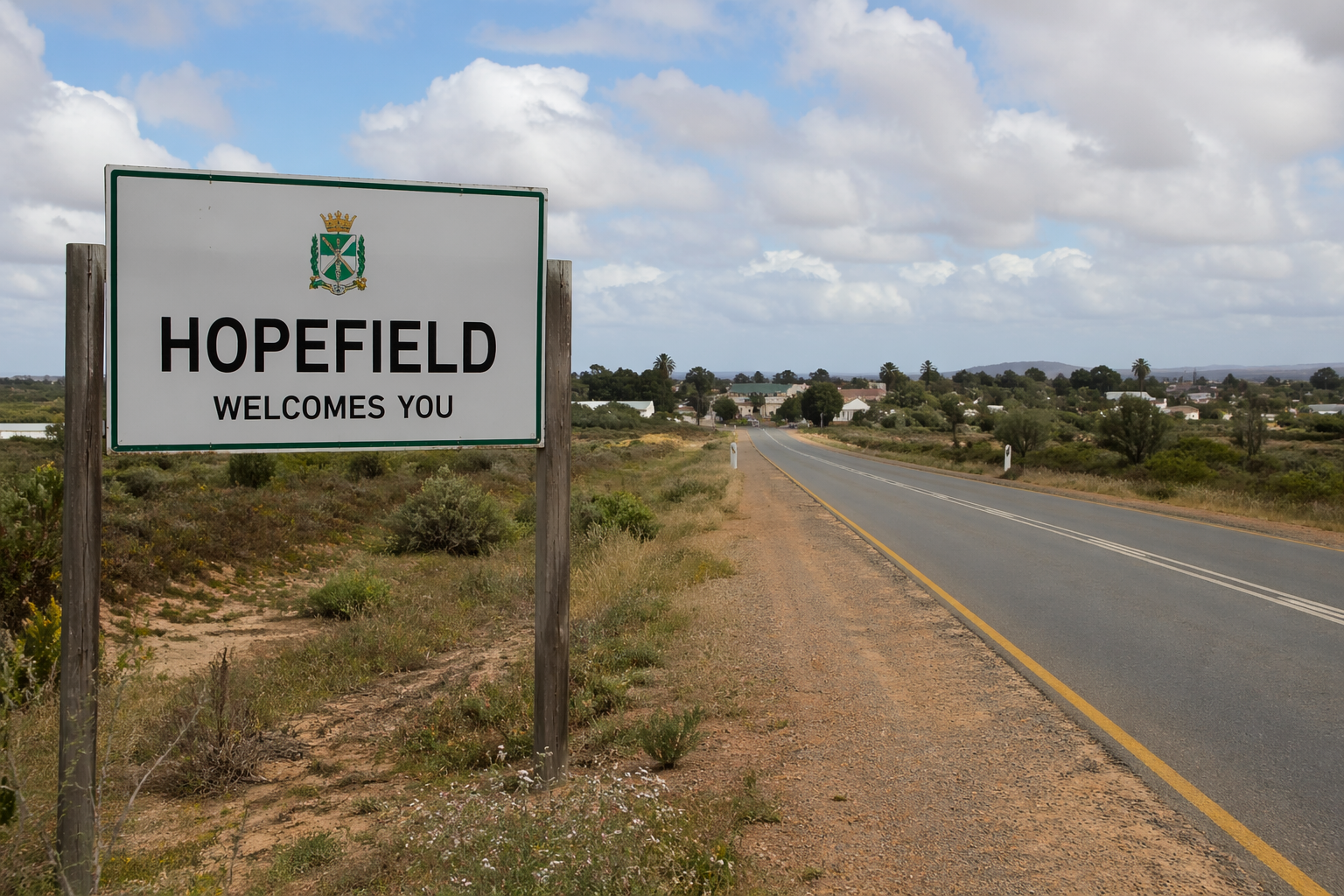
HOPEFIELD:- Residents remain sharply divided over the proposed multimillion-rand solar PV facility (with associated battery energy storage) linked to the larger Phelan Green Energy / Cullisol Holdings Green Hydrogen and eSAF ambitions near the town. While job creation is a key drawcard, serious worries about environmental impact, water scarcity, and safety risks are growing.
Battery Storage Risks
Large-scale “Battery Energy Storage Systems (BESS)” are planned as part of the development to store solar energy for reliable supply to the hydrogen plant. Lithium-ion (or similar) battery systems carry well-documented risks:
-Thermal runaway: – where a single cell overheats, leading to fire, release of toxic/flammable gases, and potential explosions that can spread rapidly to adjacent units.
– Fires are notoriously difficult to extinguish (sometimes taking days) and can produce hazardous smoke affecting air quality and nearby communities.
– International incidents (e.g., Moss Landing in California, various U.S. solar battery+sites) have led to evacuations, highway closures, and injuries to firefighters.
South Africa has also seen smaller BESS fires.
Developers will need to address fire suppression, spacing, monitoring, and emergency response in their Environmental Impact Assessment (EIA). Critics argue that details on these mitigations remain insufficient for a project this scale.
Closeness to Town
The solar arrays and associated infrastructure are proposed on multiple farm portions (e.g., Hartebeesfontein and surrounds) relatively close to Hopefield.
Residents worry about:
– Visual and landscape impact on the rural character.
– Noise, dust during construction, and potential long-term effects on property values and tourism.
– Cumulative industrialisation of the area alongside other West Coast developments.
Maps shared in community WhatsApp’s discussions show the red-zoned development area, significantly encircling or bordering parts near the town, raising questions about buffer zones.
Water Scarcity in an Already Dry Region
This is one of the biggest flashpoints: The Western Cape, including the West Coast, faces ongoing water stress. The project will require significant water for construction, panel cleaning, and especially hydrogen production (electrolysis is water-intensive).
– Developers have stated they won’t use municipal drinking water from Hopefield or Saldanha, planning instead for greywater from Saldanha Wastewater Treatment Works, ultra-purified sources, and possible desalination backup.
– Many residents remain skeptical and demand ironclad, independently verified guarantees of sustainable water supply for the next 10 – 20+ years without depleting groundwater or affecting agriculture and local users.
Proof of reliable water over the long term should be non-negotiable before approval. In a drought-prone area, any shortfall could have severe consequences for the whole district.
Public Meeting Tonight
The community gathering at the NG Church Hall in Hopefield this Wednesday evening, June 24. 2026 is a crucial opportunity for locals and West Coast residents to ask tough questions on batteries, proximity, water security, fynbos protection, and more.
Turnout is expected to be strong.
CCN / Balanced View: Renewable energy and green hydrogen bring real economic potential (jobs, investment), but in sensitive, water-scarce rural areas like this, the precautionary principle applies. Projects must prove they won’t cause more harm than good – through transparent EIAs, independent oversight, and binding commitments on water, safety, and biodiversity. Rushing risks long-term regret for Hopefield and surrounds.