

To Every Community in South Africa – Stop Blaming…..
CCN Editor – George C April
Across South Africa, people are quick to blame parents when young people show disrespect, drift into gangsterism, or fall into destructive behaviour
We hear it daily: “Parents don’t teach their children manners anymore.”
But this view, while convenient, is painfully incomplete.
The truth is harder to swallow: our communities are failing our children.
And until we accept this, nothing will change.
For decades, families have carried the blame alone while entire neighborhoods stand by watching young people break, fall, and disappear into violence and crime.
- Children do not raise themselves.
- Parents do not live in isolation.
- Every child grows inside a community, shaped by what that community offers, or refuses to offer.
And right now, South African communities are offering far too little.
Children Want to Be Seen – But No One Is Looking
Today’s child is desperate: desperate to be noticed, desperate to be listened to, desperate to feel that an adult care enough to guide them.
Children naturally look up to adults, parents, teachers, coaches, uncles, neighbours. But the problem begins when adults see only what the child does wrong, instead of seeing the potential they can help unlock.
- A child can be one conversation away from a better path.
- One soccer match away from hope.
- One mentor away from a changed future.
But too many communities are silent.
- No after-school programmes.
- No weekend activities.
- No sports fields maintained.
- No role models stepping forward.

In this vacuum, gangs step in – fast, early, and with open arms. While good people are “too busy”, gangsters are recruiting ten-year-olds with promises of belonging, protection, brotherhood, and money.
The Boy Child Crisis: The Consequence of Community Neglect
I read a Whats-app post on a group, shared this week echoes what many community workers, NGOs, and teachers have been warning for years: if we want to end violence, crime, and gender-based violence, we must start with the boy child.
After more than 20 years in some of the toughest, most violent areas of South Africa, NGOs report the same pattern:
-
- Over 60% of boys grow up without a present father.
- Many fathers who are present struggle with trauma, joblessness, alcoholism, or addiction.
- Primary schools are dominated by female teachers – caring, hardworking, but unable to fill the emotional gap left by absent men.
- Social workers and NGO staff are mostly female.
- Positive male role models are disappearing from our communities.

When a boy grows up without a model of what a strong, gentle, respectful man looks like, how does he learn?
When no man guides him, listens to him, and believes in him – how does he choose a better path?
When the only “men” who give him attention wear gang colours, what chance does he have?
This crisis is not a parenting problem.
It is a community failure.
Blaming Crime on Police or Government Alone Is a Weak Excuse
Whenever violence erupts – gang shootings, robberies, murders, gender-based violence – communities demand:
- “More police!”
- “Harsher punishment!”
- “Longer sentences!”
- But policing does not prevent broken boys from becoming broken men.
- And broken men are the ones filling our courts, our jails, and our cemeteries.
- If communities continue to ignore their children until crime happens, the cycle will never end.
The question we must answer honestly is this:

- What are WE doing to stop boys from being recruited at age 10?
- What are WE doing to give them hope?
- What are WE doing to teach them respect, compassion, and responsibility?
The Real Solution: Community Action, Not Complaints
Ending gender-based violence, gangsterism, and youth crime begins long before a boy becomes a teenager.
It starts the moment a community decides:
- These are our children.
- Not someone else’s problem.
- Here’s how communities can begin breaking the cycle today:
- Create Safe After-School Programmes
Idle time destroys children.
Sport, arts, tutoring, workshops, and weekend programmes save them.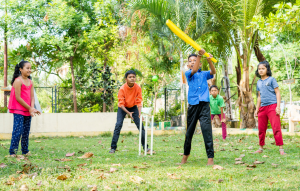
- Bring Real Role Models into the Community
- Invite rugby players, netball stars, actors, coaches, athletes, and local heroes -anyone who can inspire.
- A single talk can shift a young person’s destiny.
- Support Organizations Working with Boys
- There are plenty of programmes for girls, and that’s good.
- But boys have been left behind, emotionally and socially.
- Teach Boys Emotional Strength, Not Hardness

A boy who is allowed to feel, cry, speak, and be guided becomes a man who does not harm.
- Adults Must Step Up: Every adult can influence a child, with words, time, love, respect, and guidance.
If we want change, we must BE the change they look up to.
Cycles Only Break When Communities Act Together
- Gender-based violence is not only a women’s issue.
- Gangsterism is not only a police or government issue.
- Youth crime is not only a parenting issue.
They are community issues.
- A country changes when its communities change.
- Communities change when adults decide they will no longer look away.
It starts with our boys.
It starts with us.
It starts today.
A CALL TO ACTION – YOUR VOICE MATTERS
To every: parent, teacher, coach, community leader, pastor, social worker, police officer, lawyer, business owner, artist, athlete, mentor, and every South African who cares about our children:
+ This story is not meant to be read and forgotten.
+ It is a call – a loud one – for voices that are willing to speak, guide, and help rebuild our communities.
+ If you believe our children deserve better…
+ If you have an idea, an opinion, or a solution…
+ If you want to play a role in shaping the next generation…
We want to hear from you.
Please visit the Cape Coast News website and use the “Contact Us” form to share your opinion, message, or contribution. Your thoughts may be featured and shared to encourage national dialogue and collective action.
+ Let your voice be part of the movement.
+ Let your message inspire another community.
+ Let your words help change a child’s life.
South Africa needs leaders – not only in titles, but in action.
Stand up – Speak up – Be part of the solution
Every picture in this story in tells a story – if you as a parent or a community member don’t see it….
