Who is really building the system that is collapsing?
CCN Reporter – George April
Herman Mashaba’s words at the election results centre in Midrand were sharp
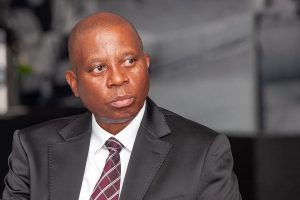 Google picture – Herman Mashaba
He labelled the Democratic Alliance “racist” and declared he could not work with them, saying he would be betraying Black people if he supported racism. Helen Zille, the DA’s mayoral candidate in Johannesburg, was placed firmly in the crosshairs.
This is not the first time the race card has been played so openly – and it is not coming from only one side.
In South Africa, racism has become a convenient shield. When political leaders are cornered, or when they do not want to talk about failed service delivery, corruption or crime, the race card is quickly thrown onto the table. It is easier to brand your opponent a racist than to explain why the streets are dark, why the water does not run, or why children are dying in gang crossfire.
The irony is bitter.
Politicians from across the spectrum, the ANC, the EFF, ActionSA and the DA – have all contributed over many years to the system that is now collapsing. They have made policy, approved budgets, made appointments and issued promises. Many of them have held power for years or served in coalitions.
Now, when the consequences become impossible to ignore, unemployment, crime, collapsing services – the finger is pointed at “racism.”
Helen Zille is not without controversy: Her comments on colonialism years ago caused storms. But to present her or the DA as the main cause of South Africa’s problems is an oversimplification.
The same applies to Mashaba: He himself served as mayor of Johannesburg in a coalition, and his party’s positions on immigration and “South Africans first” are viewed by many as xenophobic.
The real problem is not only white-on-Black or Black-on-white racism. It is a political culture that uses racial identity to hold or win power, while the hard work of governing — delivering water, keeping the lights on, fighting crime and creating jobs – is pushed aside. Communities on the Cape Flats, in Gauteng’s townships and across the country pay the price.
They sit in the dark, both literally and figuratively. They hear political leaders call each other racists, while the police rarely engage them on crime, schools underperform, and young people see no future.
If racism is truly as strong as Mashaba claims, then we must ask: Why is it so easily used as a political weapon, yet so rarely treated as a problem that requires fair policy, better education and real economic growth? The system that is collapsing was not built by one party or one race.
It was built by political leaders who for years set the wrong priorities, and who now play the race card to distract from those failures.
The question is not who the biggest racist is. The question is: When will political leaders stop pointing fingers and start doing the hard, unglamorous work of governing? Until that happens, racism remains a convenient smokescreen, and the people who pay the highest price are ordinary
South Africans who simply want the lights to come on, the streets to be safe, and their children to have a future.
